WHAT'S NEW?
Loading...
Showing posts with label OTHER TRICKS. Show all posts


NOW USE INDIAN NUMBERS FOR OTP NOT ALL OTPS ONLY OTP THAT CAN BE SEND VIA CALL.(WORKING FOR WHATSAPP PAYTM AND MANY MORE APP)
download
  1. download super receptionist app from Play Store.
  2. now open the app  and sign up or log in your account.
  3. Now if you are singup please goto upgrade tab and click on free for life button.

    Now goto settings and click on coin balance.

  4. You will be see a sr number simply paste this number any app or site that send otp via call.
  5. The sr number divert all calls to your number that you insert on singup.
  6. You can use this number in whatsapp paytm nearbuy ixigo etc.
This is 100% free of cost you can make free call from this number simply just goto click to call and make free call on non dnd numbers.
THIS IS WORKING FINE NOW. IF YOU GOT ANY PROBLEM PLEASE WRITE A COMMENT.


Ola Cabs Free Ride Trick Today we have’n a new ola cabs free trick and this ola cabs trick by TutorialHaXnlimited times. Today’s time in many cities almost in every city ola cabs is available there are many cabs powered by ola like Seden, Mini and More. If you need to go some where and wants to go in a car then OLA cabs is the best solution for it just use it to book a cab for you and go where ever you want. In this trick you’ll get Rs 200 free voucher per time and you would be able to grab out the unlimited free ola money and enjoy this ola cabs free ride trick as much as you can it’s free for you if you earn unlimited money so let’s see how to grab this ola cabs free ride trick now.
                           Ola Cabs Free Ride Trick

OLA Cabs Unlimited Money Trick In this trick we tell you that how you would be able to get Rs 200 free ola money in your ola cabs wallet and we also tell you that how you would be able to get Rs 200 in your ola cabs wallet again and again, by which you would be able to earn unlimited money in ola, this trick works instantly and I hope you’ll get success to grab out this ola cabs free ride trick and get ola cabs bonus, unlimited times. This ola cabs free ride trick works unlimited times for all users,

How To Get Ola Cabs First Free Ride :

  1. Firstly You Needs To Download- OLA Cabs Now
  2. Now Install and Open The App If you already have then open it.
  3. Just Login or Signup on OLA Cabs App.
  4. Now Just Book a “PRIME” Cab From App.
  5. Then Apply Promocode- PRIMESOCIAL while booking cab.
  6. Yo Yo! You cab is booked for free now just enjoy your ride till Rs 200.

More Ola Cabs Offer For Mumbai Users Only :

New Promocode For Ola Cabs Luxury Sedan Use This Coupon For Rs 150 Off- PUB150

Terms and Conditions For This Ola Cabs All Users Promocode :

  • Get Rs 200 Off on next Prime ride.
  • Valid from 12 Mar 2016 to 30 Apr 2016
  • Valid on Android App, Windows App, iPhone App
  • Car Category is any of Luxury Sedan
  • Applicable days : All 7 Days of week
  • Max usage per user : 1

OLA Cabs Free Ride Unlimited Time Working Trick :

DNS lookup failed on Google Chrome browser which says “The Server at www.example.com Cant’t be found, because the DNS lookup failed” is one of the most irritating errors which users face. It can be easily fixed, but people are not aware about the methods or ways to fix DNS lookup failed error. This error is mostly faced by users in Google Chrome browser. Yeah, you can switch to other browser to get rid of this error, but we all know that Chrome is the best web browser for mac and windows available right now. So we will recommend you to fix DNS lookup Chrome error, instead of uninstalling Chrome.
DNS Lookup failed
Before moving on to the DNS lookup failed error solution, first let us tell you that what is DNS lookup failed error. DNS lookup failed either when you internet connection is not working or when the DNS Server is not Responding. DNS lookup failed is same to DNS_PROBE_FINISHED_NXDOMAIN error and DNS_PROBE_FINISHED_NO_INTERNET error in Google Chrome browser.So here in this post we are going to tell you about the best ways to fix DNS lookup failed error on Google Chrome browser. Let’s get started.

Ways To Fix DNS Lookup Failed On Google Chrome On Windows 7/8/8.1/10

There are many solutions available to fix DNS lookup error. As there are many ways it can be caused. So we will tell you about some popular ways to fix DNS lookup error, which works for almost all.

Change Default DNS Server On Your Computer

As we have already told you that DNS lookup error can be caused because of DNS connectivity failure. So you can change the DNS servers to make it work again. Just follow steps mentioned below, and we hope your problems will be solved by following them.
  • First of all, you will have to open Network and Sharing Center on your Windows. You can do it either by right clicking on Network Icon, or go to Control Panel >> Network and Internet >> Network and Sharing Center
  • After getting into the Network and Sharing Center, click on currently connected Network Adapter.
Click on connected network
  • Now a popup will appear and there click on Properties
properties
  • Now after clicking on Properties, visit the Networking Tab and click on Internet Protocol Version 4 (TCP/IPv4), and then select Properties.
SELECT IPV4
  • Now a new pop-up will appear on your screen, in that box. Select Use the following DNS server addresses and enter following DNS as
Preferred DNS Server: 8.8.8.8
Alternate DNS Server: 8.8.4.4
change dns
  • Now Click on OK and reboot your system and connect to the internet

Fix DNS Lookup Error Using CMD (Command Prompt)

Fixing DNS lookup error using command prompt is much easier as you just have to run some commands in the CMD window with administrative privilages.
  • Open Command Prompt (Admin).
  • Run one by one the below commands,
IPCONFIG/RELEASE
IPCONFIG/ALL
IPCONFIG/FLUSHDNS
IPCONFIG/RENEW
NETSH INT IP SET DNS
NETSH WINSOCK RESET
  • Now Restart your Computer and Connect to internet. Hope your problem will be solved.

Clear The Cache and Cookies To Fix DNS Lookup Error

Though the 2 methods mentioned above works almost all of the times, but still if you are not able to solve DNS lookup failed error on Google Chrome, then there might be problem with your browser. In that case you can resolve the issue by following below steps.
  • Open Google Chrome browser.
  • On the toolbar, click on the Chrome Menu icon.
  • Now from the menu, click on ‘Settings’.
  • Now scroll down, till you see ‘Show Advanced Settings’. Click on it, and Google Chrome will open some more settings for you.
  • From that, click on ‘Clear Browsing Data’.
  • A pop-up will appear on your screen. From that tick mark on Browsing History, Download History, Cookies and Other Site and Plug-in Data and Cached Images and Files.
  • In the Obliterate the following items from option, select The Beginning of Time and click on Clear Browsing Data
clear cache and cookies
  • Once the process gets finished. Restart your entire system and your internet might work properly.

Conclusion

Google Chrome is definitely a great web browser as it have many features in it, which other web browsers doesn’t offer. It is well known for its speed, syncing facility and security. DNS lookup failed error can arrive anytime on any web browser if your internet is not working properly, but DNS lookup error is very common among Google Chrome users, so we thought to share solution of DNS lookup failed error on Google Chrome. If you know about any other way to fix DNS lookup failed on Google Chrome, then let us know about it via comments below.


Many people around the world have a slow connection and in order to see a page like this one, they take a whole cup of coffee while it's loading for them. Unfortunately, This tutorial isn't for them, because, in fact, this trick requires a good connection which is not necessarily fast.

If you like to see pages loading faster, willing to download or upload very big files, or only looking for a way to unlock a blocked website in your country or area, etc. then you've come to the right place.


How to surf the internet at the speed 500 Mbps?

In order to surf the internet at 500 Mbps, you just need to register in Rabbit. This is a chatting website that allows its users to use webcam, microphone or text only. But, we can also use it as a browser to surf the internet! Here's how to do it.

1) Go to Rabbit then click on Sign up, after that choose the way you like to register your new account.

2) Confirm your account by clicking on the link you've received on your email

3) Once registered, the website will ask you the following question "How do you want to Rabbit? Take your pick:", Here, choose Messages only. COOL! After that, you just need to click on Rabbitcast Launchpad (see the following picture)


Rabbitcast Launchpad


4) When you click on it, a new notification will appear asking you to choose from a list of suggested websites like Youtube, Hulu and Netflix. Or you can merely enter any website you wish. I tried Bestoffernet.com


Bestoffernet on rabbit

5) Here's how it looks like in the browser: ( if you don't like the quality of the image, turn it from LD to HD)

bestoffernet.com on rabbit


So, this is the best way to watch youtube videos at 1080p HD on a slow connection, without interruptions.

I tried "speed test" and here is the result, the speed exceeds 500 Mbps:


speed test


Note that this service works just like a VPS. You can download files, save them and then upload them to services like Dropbox in a very short time.

I hope you like this trick which is not going to last for a long period, so enjoy it!
If you have any question or anything, don't hesitate to use the comment box below. I will be glad to hear from you.

This article will show you some of the top ways the best *h*a*c*k*e*r*s use to keep themselves hidden and out of jail and to be a better hacker.
(Note: Educational purposes only;written for beginners.)

1.Never tell anyone you are a hacker

2.Never hack without a proxy

3.Always use a proxy when doing anything remotely illegal

4.Never hack from your house

5.Never use your real name in a conversation or sign up sheet

6.Always use fake information when signing up for something such as an account

7.Never use the same password more than once

8.Never use a password that can be found in the dictionary

9.Always use a firewall

10.Never let the F.B.I. into your house without a warrant stating their intentions.

11.Never let the F.B.I. in period.

12.Always have a panic button that mass deletes all your questionable material.

13.Make sure that the deletion of your files it is at least in compliance with the Department of Defense deletion protocol if you have time; The Guttman Method is the best.

14.Never hack from the same computer twice if possible

15.Always wave to cops

You might say to yourself that you do not follow one or more of these rules. This is why most *h*a*c*k*e*r*s get caught. They forget to cover their tracks and get busted. The more rules you abide by, the better your chances are of staying hidden.

If your ISP is having issues with its DNS service, switching to OpenDNS' DNS will get you back online in just a few quick steps. Follow the instructions for your operating system or router below.

If you have friends, family, or colleagues who have the same ISP as you, send them this info to help them get back online. Text them or call them with the IP address http://208.69.38.205.

Or, tell your Twitter followers that they can get back online by following the instructions on http://208.69.38.205.
Questions? Tweet @OpenDNS for assistance getting set up.

Where will you be setting up OpenDNS?

Mac OS X

  1. Go to System Preferences.
  2. Click on Network.
  3. Select the first connection in your list and click Advanced.
  4. Select the DNS tab and add 208.67.222.222 and 208.67.220.220 to the list of DNS servers.
  5. Click OK

Windows 7

  1. Click the Start Orb, then select Control Panel.
  2. Click on Network and Sharing Center.
  3. Click on your primary connection or Local Area Connection under Active Networks.
  4. Click the Properties button.
    Windows 7 may prompt you for permission to make network setting changes.
  5. Highlight 'Internet Protocol Version 4' and click Properties.
  6. Click the radio button 'Use the following DNS server addresses:' and type 208.67.222.222 and 208.67.220.220 in the Preferred DNS server and Alternate DNS server fields.
  7. Click OK button, then the Close button, then Close again. Finally, close the Network and Sharing Center window.
    At this point, we highly suggest that you flush your DNS resolver cache and web browser caches to ensure that your new configuration settings take effect.

Windows XP

  1. Select Control Panel from the Start menu.
  2. Click Network Connections from the Control Panel choices.
  3. Choose your connection from the Network Connections window.
    If you have more than one, choose your default/current connection.
  4. Click Properties button.
  5. Select Internet Protocol (TCP/IP) and click Properties.
  6. Click the radio button Use the following DNS server addresses and type 208.67.222.222 and 208.67.220.220 in the Preferred DNS server and Alternate DNS server fields.
  7. Click OK

Windows Vista

  1. Click the Start Orb, then select Control Panel.
  2. Click on View network status and tasks.
  3. Click on View status.
  4. Click the Properties button.
  5. Vista may ask for your permission to make changes. If so, click the Continue button.
  6. Select Internet Protocol Version 4 (TCP/IPv4), then click the Properties button.
  7. Click the radio button "Use the following DNS server addresses:" and type in OpenDNS addresses, 208.67.222.222 and 208.67.220.220, in the Preferred DNS server and Alternate DNS server fields.
  8. Click the OK button, then the Close button, and the Close button again. Close the Network and Sharing Center window.

Generic Router

  1. Open the preferences for your router.
    Often, the preferences are set in your web browser, via a URL with numbers (example: http://192.168.0.1). You may need a password.
    If you're like us, and you set the router password long ago and cannot remember it now, you can often reset the password to the manufacturer default by pressing a button on the router itself.
    Or preferences may be set via specific application for your router, which you installed on your computer when you added the router.
  2. Find the DNS server settings.
    Scan for the letters DNS next to a field which allows two or three sets of numbers, each broken into four groups of one to three numbers.
  3. Put in the OpenDNS server addresses, 208.67.222.222 and 208.67.220.220, as your DNS server settings and save/apply.

Linksys Router

  1. Visit the router's IP address in a new browser window.
    http://192.168.1.1 is the default Linksys router IP address.
  2. Enter the Network password.
    The "Enter Network Password" window will appear. Skip user name and type the router's password (admin is the default password, if you haven't changed it) and click the OK button.
  3. Type in OpenDNS addresses, 208.67.222.222, 208.67.220.220, in Static DNS 1 and Static DNS 2 fields.
  4. Click Save Settings button.

Netgear Router

  1. Type the router's setup URL (http://www.routerlogin.nethttp://192.168.0.1or http://192.168.1.1) into a web browser address bar.
    http://192.168.1.1 is the default Netgear router IP address.
  2. Enter the password.
  3. Type in OpenDNS addresses, 208.67.222.222 and 208.67.220.220, in Primary DNS and Secondary DNS fields.
  4. Click Apply button.
  5. Wait for the settings to be updated.

D-Link Router


  1. Visit the router's IP address (http://192.168.0.1) in a new browser window.
    If you are attempting to configure a D-Link router, take note of your computer's Default Gateway IP address. The Default Gateway is the IP address of the D-Link router. By default, it should be 192.168.0.1. Most D-Link devices use the 192.168.0.X range.
  2. Enter the router password.
    Note: if you have not changed the original settings, the default username is admin and the password is blank (nothing).
  3. Click on the Manual Internet Connection Setup button at the bottom.
  4. Enter the OpenDNS addresses, 208.67.222.222 and 208.67.220.220, in Primary DNS Server and Secondary DNS Server fields.
  5. Click Save Settings button at the top.

Now Getting A USA Address s Very Simple !

You Just Need To Sign Up Here

After Sign You Need To Pay Fee 5$

But Don't Worry I Have Voucher For This


Simply Copy
UNLOCKED
And Apply Now

Now You Have Free Sign Up

Enjoy Your Address In USA

Why You Need For Because Of !

You Can Buy Things With Low Price

Many Companies Giving Discount Only USA People

So Enjoy Your Stay In USA

[​IMG]
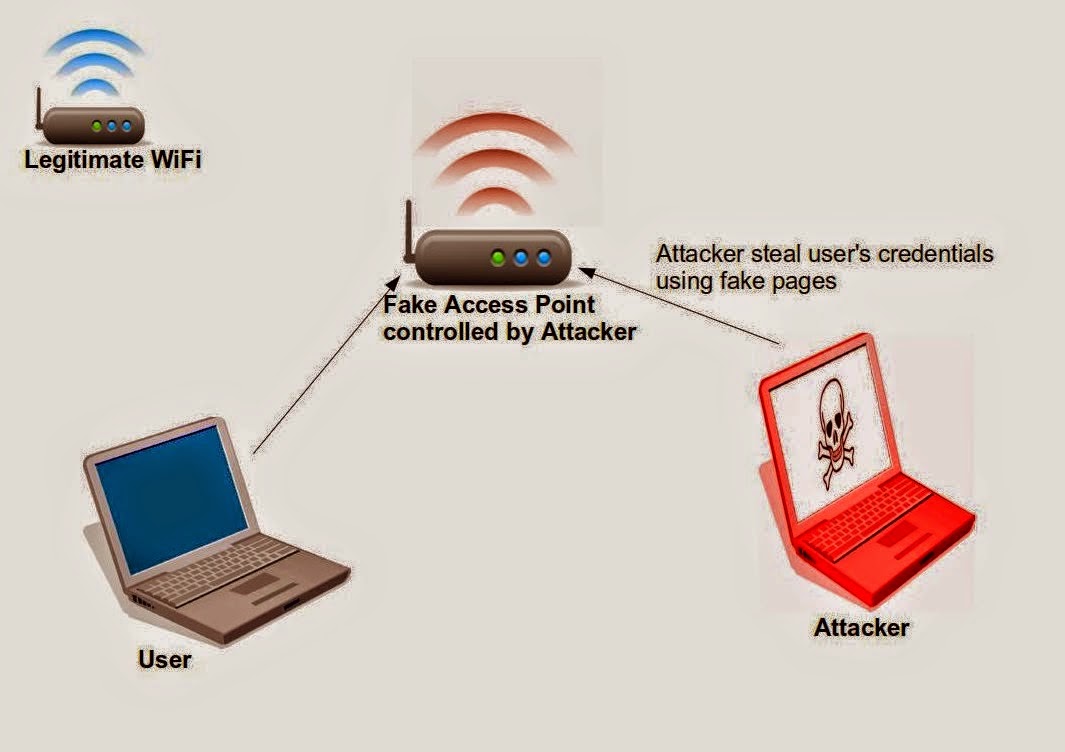
EvilAP_Defender is an application that helps wireless network administrator to discover and prevent Evil Access Points (AP) from attacking wireless users.


The application can be run in regular intervals to protect your wireless network from Evil Twin like attacks. 

By configuring the tool you can get notifications sent to your email whenever an evil access point is discovered.
Additionally you can configure the tool to perform DoS on discovered evil AP in order to give the administrator more time to react.
However, notice that the DoS will only be performed for evil APs which have the same SSID but different BSSID (AP’s MAC address) or running on a different channel. This to avoid DoS your legitimate network.

The tool is able to discover evil APs using one of the following characteristics:

  * Evil AP with a different BSSID address
  * Evil AP with the same BSSID as the legitimate AP but a different attribute (including: channel, cipher, privacy protocol, and authentication)

  * Evil AP with the same BSSID and attributes as the legitimate AP but different tagged parameter - mainly different OUI (tagged parameters are additional values sent along with the beacon frame. Currently no software based AP gives the ability to change these values. Generally software based APs are so poor in this area). 


Whenever an Evil AP is discovered the tool will alert the admin through email (SMS will be supported soon). 

Additionally the tool will enter into preventive mode in which the tool will DoS the discovered Evil AP.


The tool can be configured easily by starting in what we call “Learning Mode”. In this mode you can whitelist your legitimate network. This can be done by following the wizards during the Learning Mode. You can also configure the preventive mode and admin notification from there as well.


Finally, you need to change into Normal Mode or re-run the tool in this mode in order to start discovering Evil APs.

evil-twin-attack-fake-wifi-access-point


Requirements:

  - Aircrack-ng suite
  - Your wireless card must be supported by Aircrack-ng. Check the following URL: http://www.aircrack-ng.org/doku.php?id=compatibility_drivers#which_is_the_best_card_to_buy
  - MySQL
  - Python

Learning Mode:

This Mode can be invoked with the “-L” switch. When running the tool in this mode the tool will start by scanning for the available wireless networks. Then it lists all the found wireless networks with whitelisted APs colored with green. It also lists the whitelist APs and OUIs (tagged parameters). 
The tool also provides several options which allow you to add/remove SSIDs into/from whitelist. You need to whitelist your SSID first before running the tool in the Normal Mode. Moreover, you can configure Preventive Mode from “Update options -> Configure Preventive Mode”. First you need to set the Deauthentication time (in seconds) into a number bigger than 0 (setting the value to 0 will disable this mode).  Then you need to set the number of time to repeat the attack. This is so important for attacking more than Evil AP because the tool cannot attack all of them in the same time (how can you attack several APs on different channels? Later on we will improve the tool and allow it to attack (in the same time) several APs in the same channel). The tool will attack the first Evil AP for specified deauthentication time then it will stop and attack the second one and so on. Be careful from increasing the Deatuth time so much because this may attack only one AP and leaving the others running. My recommendation is to set the Deauth time to something suitable such as 10 seconds and increasing the repeat time. Finally, you can configure admin notification by setting admin email, SMPT server address, SMTP username (complete email address) for authentication purpose, and SMTP password. You can use any account on Gmail or your internal SMTP server account.

Normal Mode:


This is the mode in which the tool starts to discover Evil APs and notify the administrator whenever one is discovered. This mode can be invoked by “-N” switch.


Download Now